
Never to get lost is not to live. Rebecca Solnit, A Field Guide to Getting Lost
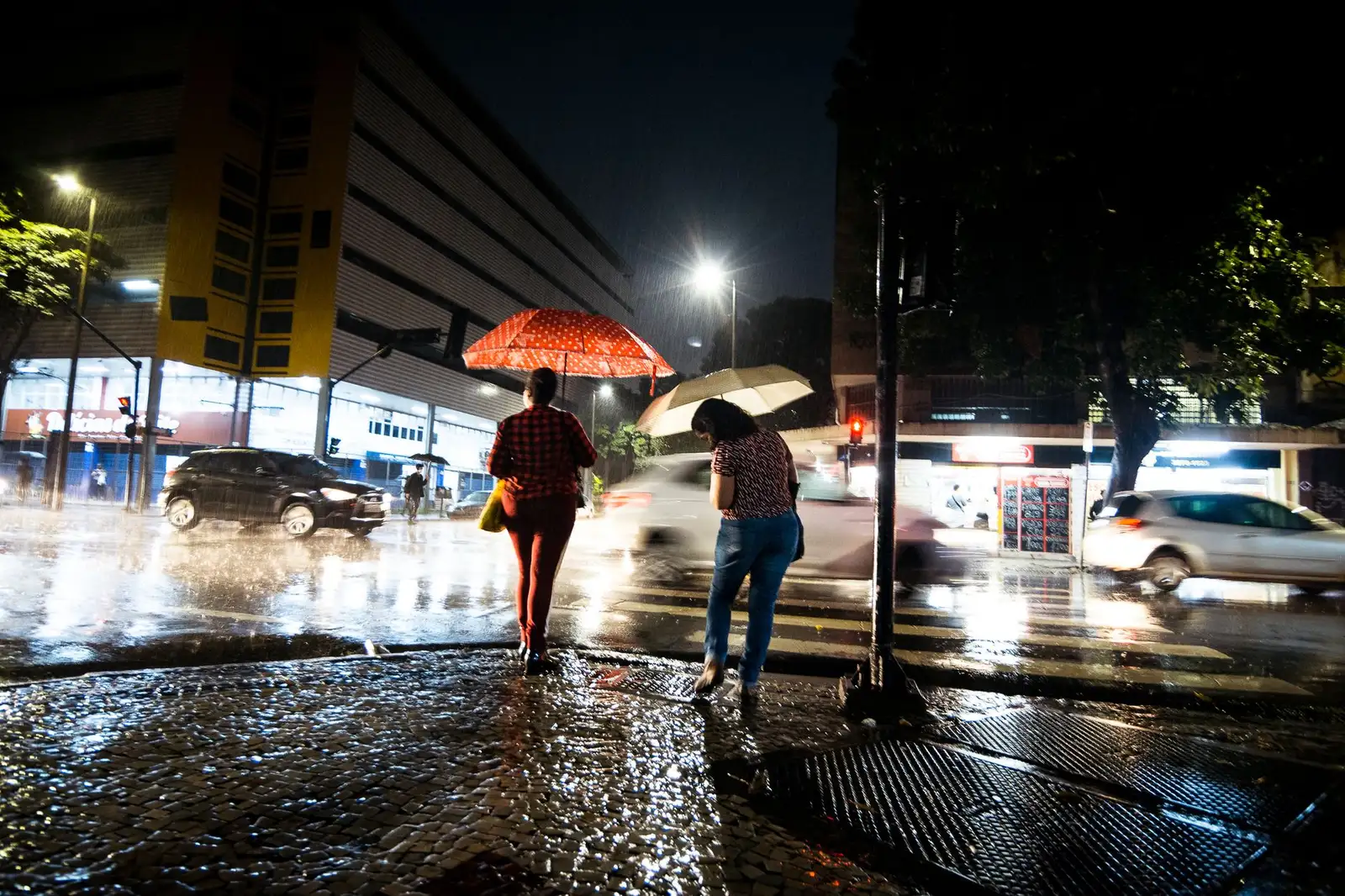
The rain in Lisbon that afternoon came sideways, off the river, the kind that makes umbrellas useless and irrelevant at the same time. I was standing under the awning of a shuttered tabacaria on Rua de São Paulo, waiting for it to let up, when a woman about my mother's age stepped beside me holding a black umbrella with a cracked handle. She looked at the rain, looked at me, and without a word tilted the umbrella so it covered both of us.
We didn't speak. I don't think either of us knew a language the other one had.
For the next six or seven minutes, until the number 25 tram came groaning down the hill, we walked together under that one umbrella toward the stop at Santa Apolónia, matching our pace to each other's without deciding to, adjusting our shoulders when the wind pushed the rain in from the side. She was maybe five foot two. I am not. The umbrella kept dipping toward her and I kept raising my arm to hold it higher, and at some point she reached up and took the handle from me entirely, because apparently I was doing it wrong, and we laughed, the first sound either of us made.
That's the whole story. She got on a different tram. I never learned her name. I think about her more than I think about people I've known for years.
There's a particular kind of intimacy that happens under a shared umbrella, and I don't think we have good language for it. It isn't friendship. It isn't quite the stranger-courtesy of holding a door. It's closer to the choreography of a couple's first dance, if the couple had never met and would never meet again: two bodies negotiating a small, temporary shelter, in real time, with no instructions.
You have to walk at the same speed. You have to lean the same direction when a gust comes through, or the umbrella tips and you both get wet on one side. If one person is taller, the other adjusts their posture without being asked to. If one person is carrying groceries, the other angles the umbrella to protect the bag more than the person. None of this gets negotiated verbally. It just happens, the way two people crossing a narrow bridge from opposite directions figure out, wordlessly, who steps aside.
I've shared umbrellas with strangers in Split, on the Riva during a sudden June storm, with a man who worked at a konoba near the old town walls and who simply extended his umbrella toward me as I stood getting soaked outside his restaurant deciding whether to make a run for it. I've shared them in Montevideo, near the Mercado del Puerto, with a teenager who seemed embarrassed by the whole thing but did it anyway. Each time, the same brief physics experiment: two strangers, one umbrella, a shared problem to solve without discussion.
What strikes me, thinking back on these moments, is how much gets communicated without a single word passing between two people. Trust, mostly. The woman on Rua de São Paulo trusted me not to be strange about the closeness. I trusted her not to steer us somewhere neither of us wanted to go. There's something almost old-fashioned about it, a kind of manners that doesn't require a shared tongue, only a shared read of the situation: it's raining, you don't have an umbrella, I do, this is obvious.
I keep coming back to a question I can't quite answer: why does this particular small kindness stick to memory the way it does, when so much larger generosity slides off?
I've been given rides to airports. I've had meals paid for by people I barely knew. I remember those too, of course, but differently, the way you remember a fact rather than a feeling. The umbrella moments sit somewhere else. I think it's because they ask nothing of you but proximity. There's no thank-you card to write, no favor to return. The transaction ends the moment the rain stops or the tram arrives, and it ends cleanly, with maybe a nod, maybe nothing at all.
Rebecca Solnit has written about the particular value of being lost, of the unplanned encounter that only happens when you've let go of the itinerary. I think shared umbrellas belong to that same family of accident. You can't schedule one. You can't seek one out without it becoming something else, something performative. It only works because neither person saw it coming.
There's a version of this that happens indoors, too, though it's not quite the same. I remember an overnight bus somewhere between Split and Dubrovnik, years ago, when the woman next to me fell asleep against my shoulder around Ston and I sat very still for the next forty minutes so as not to wake her. That's a cousin of the umbrella moment: physical closeness with a stranger, negotiated by circumstance rather than choice, resolved without a single word. But it lacks the collaboration. She didn't choose to lean on me. Under an umbrella, both people are choosing, continuously, with every step, to keep sharing.
Genoa, a different rain, years before Lisbon. I was nineteen and had no umbrella and no idea what I was doing in that city, really, other than being young and unbothered by not having a plan. An older man waiting under the portico near Via San Lorenzo watched me hesitate at the edge of the dry stone, then simply said, in Italian I only half understood, something like vieni, vieni, and lifted his umbrella toward the open street.
We walked three blocks together. He talked the entire time, about the weather, about his knees, about a nephew in Torino, and I understood maybe one word in five, and it didn't matter at all. The talking wasn't really the point, I don't think. He would have walked those same three blocks in silence with someone who spoke fluent Italian and it would have felt more or less the same, structurally: a temporary shelter, offered without expectation, dissolved at the first dry doorway.
At the doorway where our paths split, he tapped my shoulder once, the way you'd knock twice on a door you already know is open, and went on his way. I stood there a moment longer than I needed to.
I wonder sometimes if this is a dying courtesy, or if it only feels that way because I'm noticing my own habits changing. How many people, mid-downpour, are looking at a stranger under an awning rather than at a phone? The instinct to notice someone else's discomfort requires you to be looking outward in the first place. I don't think this is a grand claim about generational decline (I distrust essays that make that leap too easily), only a small honest worry about my own attention, which spends more time on a screen than it used to and less on the six feet of sidewalk in front of me.
But then it still happens. It happened in Lisbon two years ago, well past whatever golden age of manners people like to imagine existed before smartphones. Someone still looked up, still noticed, still tilted the umbrella. Maybe the instinct is sturdier than I give it credit for. Maybe rain simply forces a kind of attention that good weather doesn't require.
There's an essay by Pico Iyer, I don't remember which one exactly, where he talks about travel not as movement between places but as movement between states of attention, the way a new city forces you to notice things you'd sleepwalk past at home. I think weather does something similar, in miniature. A downpour interrupts the automatic walk from point A to point B. It makes everyone, for a few minutes, present in the same problem: how do I stay dry, and does anyone near me need help staying dry too.
The etiquette of the shared umbrella has its own quiet rules, and I've never seen them written anywhere, though I suspect anyone who's done this more than once could recite them.
You offer before being asked, because asking ruins it somehow. The person who needs the umbrella rarely asks; if they had to ask, it would become a transaction rather than a gesture, and the whole point is that it isn't one.
You don't make conversation unless the other person starts it. Silence is the default setting, not because there's nothing to say but because saying something would turn a wordless kindness into a social obligation, and then you'd both be performing friendliness instead of simply walking somewhere dry together.
You let the other person get off first, get out first, leave first. The umbrella belongs to whoever's holding it, and it's their job to watch the other person go, not the reverse.
And you don't linger for a name. This is the rule I find hardest to explain to people who haven't experienced it. It would seem, on the surface, like the natural next step, a small kindness like that surely deserves an introduction, a thank you, I'm so-and-so. But asking for a name would change what happened. It would turn an accident of weather into the beginning of something, and the beauty of it, I think, is precisely that it isn't the beginning of anything. It's complete in itself. It starts with rain and ends with dry pavement, and nothing before or after matters to it.
I've tried, a few times, to explain this to people who haven't had the experience, and it never quite lands the way I want it to. "You shared an umbrella with a stranger" sounds, described flatly, like nothing at all. A logistical footnote. Of course you shared an umbrella, it was raining, what else would you do.
But the description misses the texture of it: the deliberate slowing of pace to match someone else's, the unspoken negotiation of whose bag gets more coverage, the specific quality of silence between two people who've agreed, without agreeing, to be near each other for exactly as long as the rain or the walk lasts and not one second longer.
Is it strange that I remember the color of that woman's umbrella (black, with a cracked wooden handle, a small tear near one spoke) more clearly than I remember most conversations I had that same week in Lisbon? Maybe not. Conversation asks you to listen to words. This asked me to listen to something else, footsteps, breathing, the angle of someone's shoulder, and maybe that kind of attention leaves a different, deeper kind of mark.
Elizabeth Bishop, in her poem "Questions of Travel," wonders whether all this noticing, all this collecting of small moments in unfamiliar places, adds up to anything, or whether it's just "the freedom to notice such nice ones," a kind of self-indulgence dressed up as insight. I think about that line more than I'd like to admit. Is there really something here, in the umbrella, or am I just someone who likes assigning meaning to small nice things because it's more comfortable than sitting with meaninglessness?
I don't fully know. I lean toward thinking there's something real in it, but I hold that loosely.
What I keep landing on is this: the shared umbrella works precisely because it asks so little. No names, no debts, no continuation. It's a complete transaction that begins and ends inside a single act of weather. And maybe that's rare enough, in a life increasingly built around ongoing things, apps that track you, relationships that require maintenance, calendars that never let an event simply end, that a six-minute walk with a stranger under a cracked black umbrella feels like something worth keeping.
The last time it happened to me was in Porto, on the Rua das Flores, of all places, a street that seems designed to be photographed rather than rained on. I was without an umbrella again (I never seem to learn) and a man selling little tin fish trinkets from a cart along the sidewalk waved me under his tarp when the sky opened without warning. We stood there together for a while, not speaking much, watching the water run down the cobblestones in little rivers toward the Douro. He offered me one of the tin fish, a small gesture, mostly a joke, and I didn't take it, and he laughed.
When the rain thinned to something walkable, I thanked him in the little Portuguese I had, and he said something back I didn't catch, and I walked on toward the river without ever knowing his name.
I think about that cart more than I think about most of the churches I saw that week, the tiled ones everyone photographs, the ones you're supposed to remember. I couldn't tell you now which one had the blue and white azulejos of the caravels and which had the saints. But I remember the sound of rain on that tarp, and the way he tilted his head toward the sky like he was checking on an old friend's mood.
I don't know what to call this, exactly. Not friendship. Not quite kindness, though it's certainly that. Maybe just proof that two people can occupy the same small dry space, for no reason beyond the fact that one of them has an umbrella and the other doesn't, and that this can be enough. No further explanation required. No follow-up needed.
Rain forces the question that most of a day never asks: are you willing to be near someone, briefly, with nothing to gain from it?
Some people answer with their whole body before they've even thought about it. They tilt the umbrella. That's the whole language, right there. No grammar, no vocabulary, just an angle of a wrist and a shift of the shoulder, and somehow it says everything it needs to.
I still don't know that woman's name. I think I prefer it that way.

Comments (0)
No comments yet. Be the first!