
Never to get lost is not to live. Rebecca Solnit, A Field Guide to Getting Lost
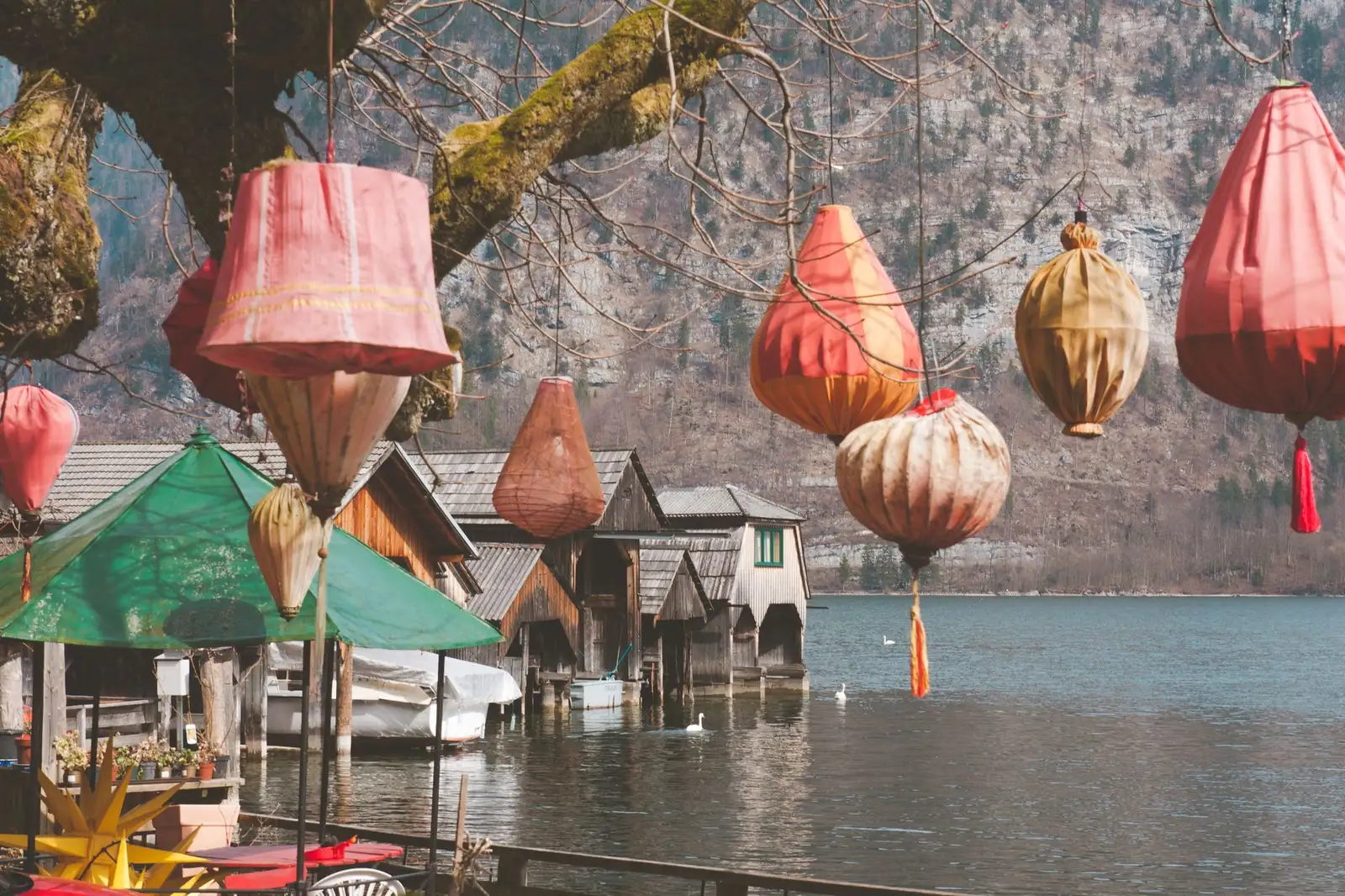
The lanterns go up in September, strung between stone walls that have held the same shape since before anyone alive can remember. By the first weekend of October, when the chestnut smoke starts curling up from the wood-pit fires, the whole town of Soriano nel Cimino has already been transformed. Not into something new. Into something older than itself, if that makes sense. A medieval version of a place that was never entirely un-medieval to begin with.
I've walked those alleys more times than I could count, at almost every hour a person can walk somewhere. But it's the lantern light I keep coming back to. Not the lanterns themselves, actually. The shadows they throw.
There's a particular quality to shadow cast by fire instead of electricity. It moves. It breathes a little, flickers at the edges, never quite commits to a fixed shape against the wall. Stand under one of those iron brackets in the old center of Soriano and watch your own shadow lengthen and shrink as the flame inside the lantern shifts with the wind coming down off the hills, and you start to understand something about permanence that no guidebook is going to hand you.
I run trips to towns like this one for a living, or something close to a living, and have for more than twenty years now. People ask what the appeal is, why bring travelers to a hilltop town in Alto Lazio that most of them had never heard of before they booked. The honest answer is that I still don't fully know how to explain it. I've tried. I've watched other people try, in the letters and emails that come after a week here, and mostly what happens is they arrive at the same sentence: I can't really put it into words, you'd have to go.
That should feel like a failure of language. After a while, though, watching it happen again and again, I started to think it means something else. Maybe some experiences resist translation not because they're vague but because they're specific in a way that doesn't survive being pulled out of the place that made them.
The festival itself has run for more than fifty years, they tell you, an autumn tradition built around the chestnuts that grow thick in the hills around town. Each of the four neighborhoods, the contrade, puts on its own costumes and colors, its own version of civic pride sharpened into something almost competitive. Walk through during the first two weekends of October and you'll pass one taverna after another, built just for the festival weeks, each one claimed by a different clan of the town.
What strikes me every year isn't the pageantry, though. It's the light.
By late afternoon the sun drops behind the hill fast, the way it does in these narrow valley towns where the horizon is really just a higher piece of ground. The lanterns come on before the sky has finished going dark, so there's a window, maybe twenty minutes, where firelight and daylight are both present and neither one is winning. That's when the shadows get strange. Long ones stretch across the cobblestones from doorways that have nothing standing in them. A lantern hung too high throws a shadow of the bracket itself, a black claw reaching across the stone.
I've stood in that light more times than I can count and felt something close to what I imagine people mean when they talk about being outside of time. Which is a phrase I distrust, generally, because it gets used so loosely it stops meaning anything. But there's a version of it that's just: for twenty minutes, the shadow on that wall could belong to nearly any century. The stone hasn't changed. The fire hasn't changed. Only the people standing in it have, and they keep changing, generation after generation, while the shadow does the same thing it always does.
Soriano gets used, from time to time, as a stand-in for other places entirely. Film crews have shot here more than once, using the streets to represent a small village in Tuscany, even though this is Lazio, a different region altogether with its own history and its own reasons for existing. I remember the first time I heard that and felt an odd little jolt. Here was a town so completely, specifically itself that outsiders kept mistaking it for somewhere else on purpose, on camera, for money.
There's something almost funny about that if you sit with it long enough. And something a little sad, too.
A place gets so good at being what it is that people borrow it to represent something adjacent, something more famous, more marketed, more legible to an audience that's never been to either. The shadow stands in for the thing. Nobody in the theater knows the difference. Does it matter, in the end, whether the light falling across those walls says Tuscany to a camera when it's actually saying Soriano to the stone underneath it?
I go back and forth on that question more than I probably should.
There's a piece I read once in Granta, one of those essays that circles the idea of travel writing's oldest problem: how do you describe a place without flattening it into the postcard version of itself, the version that could be anywhere? I don't remember every argument in it, but the basic tension has stayed with me, because it's the same tension I feel every October watching a film crew's old footage of my own hilltop town get filed under someone else's region. The shadow gets exported. The wall stays where it is.
Maybe that's the real trick lanterns play. They throw a shape that looks like it belongs to whatever's casting it, but the shape is really just light doing what light does when it meets an obstacle. Anonymous, in a way. Interchangeable, almost, if you're not looking closely.
Except you are looking closely, if you're standing there. That's the whole difference between watching something on a screen and standing under the actual lantern, feeling the actual smoke from the actual chestnut fires sting your eyes a little. The shadow that looks generic from a distance turns out, up close, to be doing something extremely particular: it's falling across a specific crack in a specific stone that's been there since long before the festival existed to light it.
I think about the guests I've brought here over the years, the ones who come back a second time, a third. More than three-quarters of the people who travel with our company are either returning themselves or showing up because a friend told them to. That's usually read as a loyalty number, proof that people liked it enough to come back. I've started to think it means something closer to what happens with the lanterns: they can't describe what happened here, not adequately, so instead of writing the sentence they just send the person.
You can't hand someone a shadow. You can only walk them into the light that makes it.
There's a version of this essay that turns into an argument about authenticity, about which towns are "real" and which have been staged for tourists or film crews, about who gets to decide. I don't think I trust that argument anymore, if I ever fully did. Soriano wasn't performing anything for those cameras. It just happened to look, in certain light, like something else. That's not a failure of identity. If anything it's the opposite: a town secure enough in its own stone and its own shadows that it can be mistaken for a neighbor and lose nothing in the process.
Late one October, years ago now, I stood at the edge of the festival crowd with a guest from Ontario who kept apologizing for not having the right words for what she was seeing. I told her she didn't need them. She laughed, a little uneasily, the way people do when they're being let off a hook they didn't know they were on.
We stood there for a while longer, not talking. The lanterns kept doing what lanterns do, throwing shapes that shifted whenever the wind moved through the alley, and neither of us tried to name it.
I've since wondered whether that's actually the whole point of a place like this, chestnut smoke and medieval costume and firelight thrown crooked against six-hundred-year-old stone: not to be captured, not even to be fully understood, but to be stood in. A lantern doesn't ask to be explained. It just burns until it doesn't anymore, and the shadow it made disappears with it, and somehow that's not a loss so much as it's the arrangement working exactly as it was built to work.
Fire is temporary by design. That's obvious enough it barely needs saying, and yet standing under one of those lanterns, watching my own shadow bend around a corner I hadn't chosen to walk toward, it didn't feel temporary at all. It felt like the one fixed thing in a night full of moving costumes and roasting chestnuts and strangers speaking three or four languages at once across the same narrow street.
Maybe that's the trick of it. The fire moves, the shadow moves with it, and somewhere in that constant small motion a person standing still can feel, briefly, like the only steady thing in the frame.
I don't know how to end a thought like that cleanly, and I'm not sure I should try. The festival wraps up after the second weekend of October, the taverna stalls come down, the lanterns get taken in or left to burn out on their own depending on which neighborhood put them up. The stone stays where it's always been.
Somewhere, on a strip of old film footage, that same stone is standing in for a village three regions away, under a director's idea of Tuscan light. And somewhere closer, under the actual lantern, an actual shadow is still doing the thing it does every year: bending, lengthening, disappearing when the wind shifts, and returning, a second later, almost but not quite the same shape as before.
I keep going back. I'm not sure I could explain why any better than the guests who write to say they can't, either. Maybe that not-explaining is itself the closest thing to an answer this particular mountain town is willing to give anyone; you'd have to stand under the light yourself to know if I'm right.

Comments (0)
No comments yet. Be the first!